
In this article, Bailey Klingaman examines the top five operational red flags that expose infusion practices to medication errors, from manual dosage calculations to fragmented resources and informal onboarding. Read on to discover actionable software and workflow solutions that eliminate these clinical vulnerabilities, standardize care, and strengthen patient safety across your organization.
You already know medication errors are a present threat to patient safety, harming 1.5 million people each year. Infusion medications pose an even greater risk, with reports signifying their involvement in 54% of potential adverse events and 56% of medication errors. These are staggering numbers that can feel daunting to clinicians in the infusion industry and even make you wonder, “How long until it’s me?”
However, it is rare that a medication error occurs simply due to a ticking clock or a clinician’s bad luck. More commonly, errors are a predictable result of operational friction and administrative gaps.
The good news is: predictable means preventable, as long as you have the right tools.
To help you find what tools you need to succeed and prevent errors from occurring, we’ve put together five red flags that signify an error may be on the horizon and what you can do to turn those flags green.
#1: Relying on Manual Math for Complex Dosing & Conversions
The first sign that you’re vulnerable to a medication error is overreliance on manual math. Particularly in infusion, mathematical calculations can be complex, time-consuming, and require a multitude of steps.
Studies show approximately 41% of all medication errors are due to improper dose calculations.
Most mistakes are due to incorrect decimal point placement, an incorrect equation, incorrect dose or frequency used in the equation, and unclear dosage instructions. In infusion therapy, errors are also commonly made by confusing units, inputting the incorrect strength or rate in an infusion pump, or the omission of double-checks.
In a study of 200 medication errors that were detected over a 13 month period, 30.5% involved adult treatment and 69.5% pediatric care. Of the errors involving adults, 67.2% of them were determined to be serious errors with the potential to result in severe adverse reactions, and 30.9% were considered serious for pediatrics.
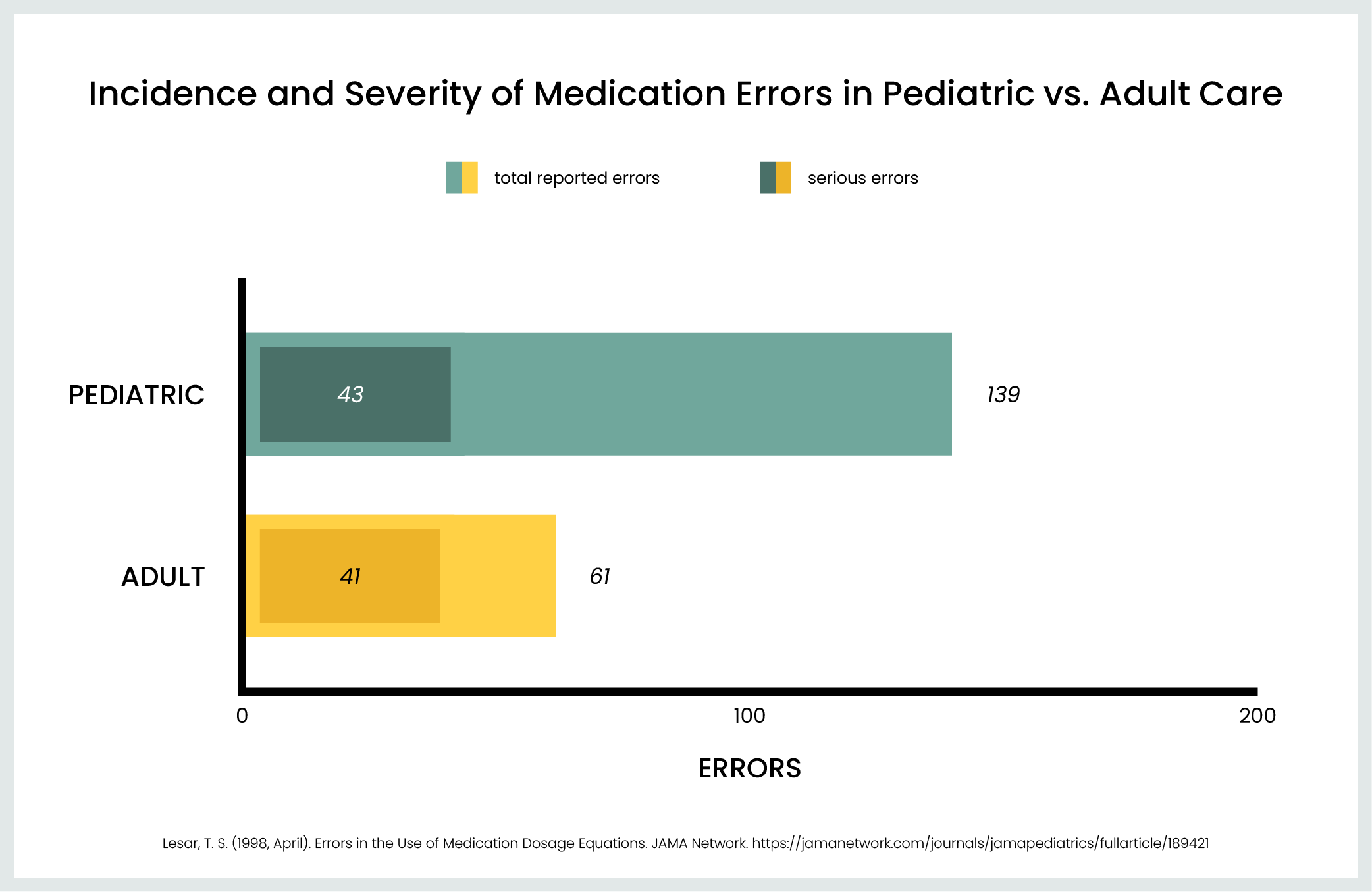
While these statistics might be shocking to see, the reason for the errors is not surprising; clinicians are not receiving the support they need.
Nurses face challenges related to numeracy skills, cognitive load, time pressure, and inconsistent educational preparation. Mean scores on dosage calculation tests reflect this struggle, ranging between 35% and 71%. In the field, nurses continue to face obstacles without being properly prepared to apply their calculation skills.
The Fix: Automate Calculations with Built-in Guardrails
To eliminate calculation errors, infusion practices need to embrace both immediate and long-term solutions.
Immediately, clinicians should have access to advanced technology solutions with built-in checks to prevent potential errors from reaching the patient. Digitization of medication order entry allows dosages to be calculated and checked more effectively. Utilizing intuitive dosage calculators with predetermined formulas and built-in parameters ensures accuracy in the calculation process and mitigates serious errors.
There are a variety of dosage calculators available online for one-off usage, but for clinicians looking for a single resource that provides all of the calculators they need in one location, we suggest an infusion drug protocol software.
Solutions like RxToolKit provide printable, built-in dosage calculators for easy access at every step of the infusion process, so clinicians don’t have to toggle between digital calculators, paper documentation, and medication protocols. By having the ability to download and print the completed calculations, clinical teams can still perform the necessary double-checks to prevent errors and provide formula documentation for verification.
One of the most important features that you should look for when choosing an infusion calculation solution is the establishment of safety parameters. A calculator—or a technology solution utilizing calculators—should be able to identify unsafe inputs and alert users of the risks.
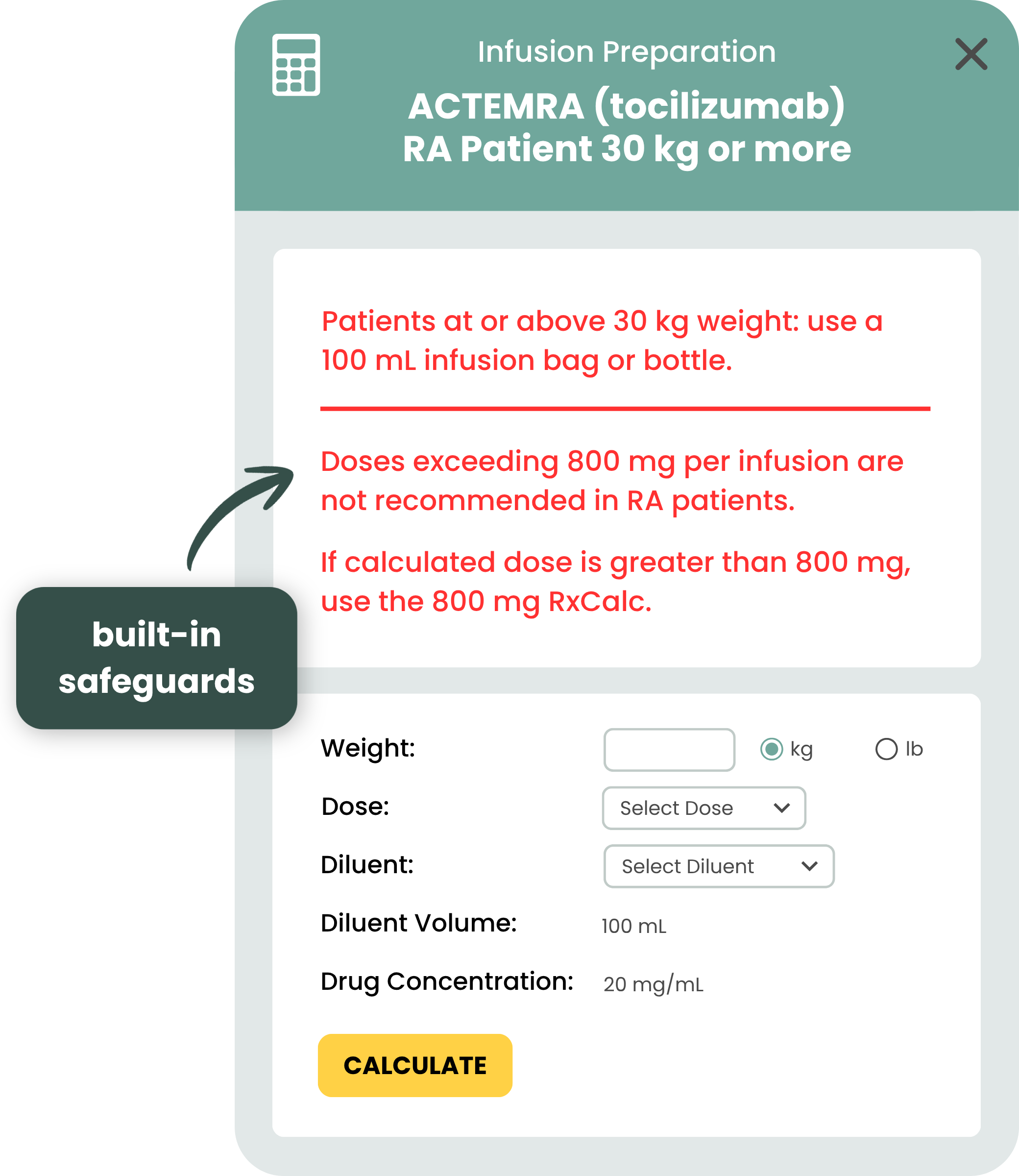
Using standard calculators found online may not include unsafe dosing limits, which can vary by drug. And while standard calculators can reduce medication errors related to decimal placements and math mistakes, they fall short when it comes to catching drug-specific risks and guiding clinical decision-making.
Long-term solutions to the calculation error threat should include enhanced training that promotes continued education and flexes clinicians’ practical math skills. For the greatest level of support and best outcomes, infusion providers should look for technology that features clinical training tools and continuing education opportunities.
Digital calculators should be made more accessible and efficient for clinicians, but it is also vital that the clinicians understand the math at its core and can still complete the computations independently if necessary.
The most successful practices will prioritize both immediate and long-term approaches, and the best solutions will inherently include both.
#2: Using Outdated or Static Drug Resources
Another red flag contributing to medication errors is delayed resource updates. Whether your practice is using a binder of paper package inserts, spreadsheets with links to drug websites and resources, or a local database of medication guides, it can be difficult to keep up with frequent FDA updates and new drug releases.
Most commonly, the FDA makes updates to infusion medications based on safety labeling changes, new Boxed Warnings, and compounding and administration corrections. In conjunction with new drug releases, keeping current with infusion medication resources can be a time-consuming, uphill battle for clinical teams.
Particularly with higher-risk infusion drugs like oncology medications and biologics, even slight variations in clinical guidelines can put patients at risk for errors and adverse reactions.
Imagine administering a medication with an outdated drug guide. A few months ago, the FDA released an update announcing a revision to the recommended titration protocols. Your medication monograph recommends starting the infusion at 10 mL/hr, doubling the rate every 15 minutes up to a maximum rate of 250 mL/hr, to finish the infusion in 60 minutes for patients who previously tolerated the drug.
However, the latest FDA guidelines now state that due to risks of severe cytokine release and acute hypersensitivity reactions, the new recommendation is to administer IV methylprednisolone, diphenhydramine, and acetaminophen 30 to 60 minutes prior to the medication if attempting an accelerated rate.
Unaware of the change, you administer the medication according to the outdated guidelines, missing the pre-medication protocol and putting your patient at risk of an adverse event.
By delaying updates to one medication resource, a patient could be severely harmed. When clinical teams are forced to rely on static medication binders or manual updates, even the most diligent providers are left vulnerable.
Protecting patients, and clinicians, from preventable errors means eliminating these gaps and evolving how infusion practices manage their drug resources.
The Fix: Offload Clinical Resource Maintenance
To eliminate the risks associated with outdated medication guides, practices need to evolve past self-managed systems and embrace technology. Regardless of whether your team relies on paper package inserts, local files, or drug websites, the challenge remains the same: Busy staff are tasked with staying up-to-date on when FDA announcements are released, and they must manually alter their resources.
To alleviate the burden, infusion practices should offload the labor to a digital source that can solve each of the obstacles they face. The main priorities when looking for a solution should include: timeliness of updates, alerts about what guidelines were changed or added, and trust in the maintenance of resources.
For those using binders or other physical solutions, you may be wondering, “Why a digital source?” The answer is simple: Accessibility.
Physical resources as medication guides take up space in storage, at the chairside workspace, and at the prep station. Keeping them dry, clean, and organized is work on its own, without considering the additional tasks of keeping them updated. A digital resource, on the other hand, lives directly within the tools most stations already have, eliminating the workspace clutter.
If you’re already using some form of digital resource, like a local server or shared drive, you likely know that going paperless only solves half of the problem. While it clears worktops, it still leaves room for error. Someone is still responsible for formatting drug protocols and replacing old files.
The benefit of utilizing an online platform of medication guides is that it is managed completely by an external team, allowing your own team to focus on their clinical responsibilities and provide high quality care.
When evaluating a potential solution, look for a resource that is maintained by a clinical team (just not your clinical team). That way, you can be confident that while your team is free to prioritize other duties, a clinical eye is still attending to your resources. Rather than your team painstakingly making revisions, trust a software solution that vets and deploys updates as soon as possible, and shows exactly where in the drug guide those changes were made.
This approach provides pharmacy-approved, up-to-date guidance for clinicians, preventing errors and safety risks. Clinicians get the benefit of immediate, searchable access to FDA-approved medication protocols exactly when they need them, without the hassle of manually tracking, updating, and maintaining the files themselves.
#3: Fragmented Resources Across Clinical Teams & Locations
The third sign of an error risk goes hand-in-hand with red flag number two: resource fragmentation. When clinical reference tools are split between binders, local files, and bookmarked websites, practice standardization dissolves. Different resources may not only be out-of-date, but can provide different instructions and protocols, leaving clinicians to navigate conflicting guidelines depending on where they look.
For infusion organizations that have multiple departments or locations, care delivery can vary site-to-site or even clinician-to-clinician. While Pharmacist A at Site 1 uses a locally-hosted PDF, Pharmacist B at Site 2 might use a bookmarked drug website. Depending on when their resources were last updated, Pharmacists A and B might be preparing the infusion according to different guidelines and with different information, leading to variations in care within a single organization.
Inconsistencies in healthcare delivery can affect care quality, and discrepancies in resource material create operational blind spots that expose clinicians to preventable errors.
The Fix: Establish a Single Source of Truth
Eliminating care variation demands standardization of practices and resources. Despite being a more recent trend in healthcare’s long history, standardization reduces costs, improves clinical outcomes, and assists in complex decision-making.
If you’re already following the advice from red flag number two, you’re hopefully solving two problems with one solution. Whatever software you choose to provide you with up-to-date clinical resources, make sure you roll out the solution in all departments and all locations.
If you’ve picked the right solution to your resource problem, the software should be able to provide a single, centralized platform with all of the necessary information for every member of the clinical team (e.g., pharmacists, nurses, specialists, patient educators), regardless of their location.

When assessing your software options, look for a platform that consolidates all of the important information and tools into one destination. Make sure pharmacy teams have access to dosing calculators and preparation instructions, chairside teams have access to administration guidelines, and patient educators have access to printable handouts for counseling and guidance.
By providing a single solution, infusion organizations will help their teams deliver safe, consistent care, while mitigating the potential for errors due to misaligned references.
#4: Informal Onboarding & Untracked Training Comprehension
Now that you’ve reviewed your resources and identified the risks, the fourth red flag exposing your practice is the reliance on informal onboarding. Even the most robust clinical guidelines are only as effective as the clinicians implementing them.
Historically, healthcare has operated largely based on apprenticeship, where clinical expertise and best practices were passed down from mentor to mentee. Formal education teaches clinicians foundational knowledge and principles, clinical reasoning, and critical thinking. Hands-on training is meant to bridge the gap between theory and real-world execution, providing new staff with an opportunity to observe the instincts, practices, and techniques of senior clinicians.
Unfortunately, over-dependence on informal shadowing and unverified training methods create vulnerabilities. Senior staff can inadvertently pass down personal workarounds or outdated practices, causing the standard of care to shift.
Additionally, shadowing inherently contributes to distractions and interruptions for senior clinicians, who are tasked with explaining their processes and answering questions while completing their tasks. Studies show the risk of a medication error increases 12.7% with each interruption.
Without standardized systems to monitor training and learning progress, the burden of measuring new staff competency falls on the practice managers or senior clinicians—who are already being pulled away from their work.
Even with slightly more formal training protocols in place, such as established training binders or competency assessments, there is still the administrative burden of ensuring completion and comprehension.
The Fix: Standardized, Trackable Clinical Education Programs
To best protect your team and patients, infusion practices must shift from informal, unmonitored training protocols to structured, trackable education programs. While our previous solutions address error prevention during the infusion process, the ultimate goal is to be proactive before an infusion order is ever prepared.
Integrating advanced clinical training tools into your workflow benefits all organizations, regardless of size. It provides:
- More accessibility and flexibility in training for staff
- Personalized learning paths and course assignments
- Real-time course progress monitoring for leadership
- Ability to pull assessment scores and comprehension reports
- Data-driven insights to help target knowledge gaps
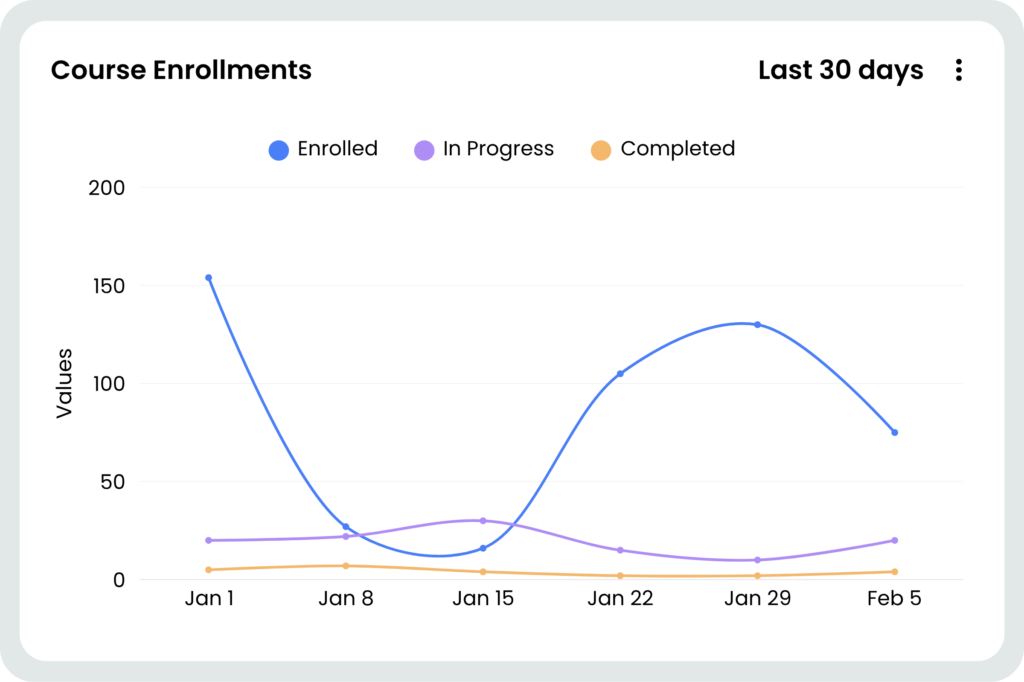
Make sure to look for a platform that pairs medication guidelines directly with education tools, so the information your team is training on aligns with the information they access as their drug resource for comprehension continuity.
A bonus feature that puts a training solution over the top would be the inclusion of clinical continuing education units (CEUs). Onboarding new team members properly is vital for setting your practice up for success, but ensuring continued success means supporting the team you already have.
A solution that goes above and beyond will provide your staff with CEUs that speak directly to the topics important in their day-to-day work: infusion therapy. The Infusion Nurses Society (INS) partners with organizations like RxToolKit to expand nurse access to CEUs by providing applicable courses and webinars directly in the infusion protocol software. RxToolKit also works with the Immunoglobulin National Society (IgNS) to give free access to the IgNS educational library, including its continuing medical education (CME) courses.
Shadowing and on-the-job training certainly have their benefits and are important parts of familiarizing new staff with their roles and responsibilities, but the establishment of more formal training protocols and measurable learning builds confidence in clinical teams and gives senior clinicians time for improved patient care.
You don’t have to choose between the two, but if your practice is relying too heavily on shadowing or training binders, it’s time to embrace the new clinical standard.
#5: Lack of Real-Time Oversight
The final red flag signifying your infusion practice has safety blind spots is if leadership is operating in the dark.
In some infusion practices, leadership only gains true visibility into clinical workflows and resource management after an adverse event or near-miss occurs. If your organization’s safety strategy relies on retrospective protocol changes, you’re operating reactively and putting your patients at risk.
Without real-time visibility into day-to-day operations, training progress, and drug guideline utilization, clinical leaders can’t identify compliance gaps that lead to harm. They may be unaware that clinicians are struggling with complex taper charts, or that they prolong the infusion process and delay treatment. They may not know whether clinicians are bypassing double-checks due to time constraints, or if a specific medication frequently causes confusion.
Relying solely on post-error investigations and troubleshooting means systems don’t improve until harm has already occurred. Proactive risk management requires dedicated oversight into how protocols are utilized, where questions arise, and how staff interact with solutions.
The Fix: Expand Workflow Visibility
Enhancing visibility means empowering clinical leadership with tools that grant them real-time insight into the infusion process.
Management should be able to see reports on how often a medication guide is accessed and who is accessing it. They should be able to track staff competency levels, progress on training courses, and scores on course assessments.
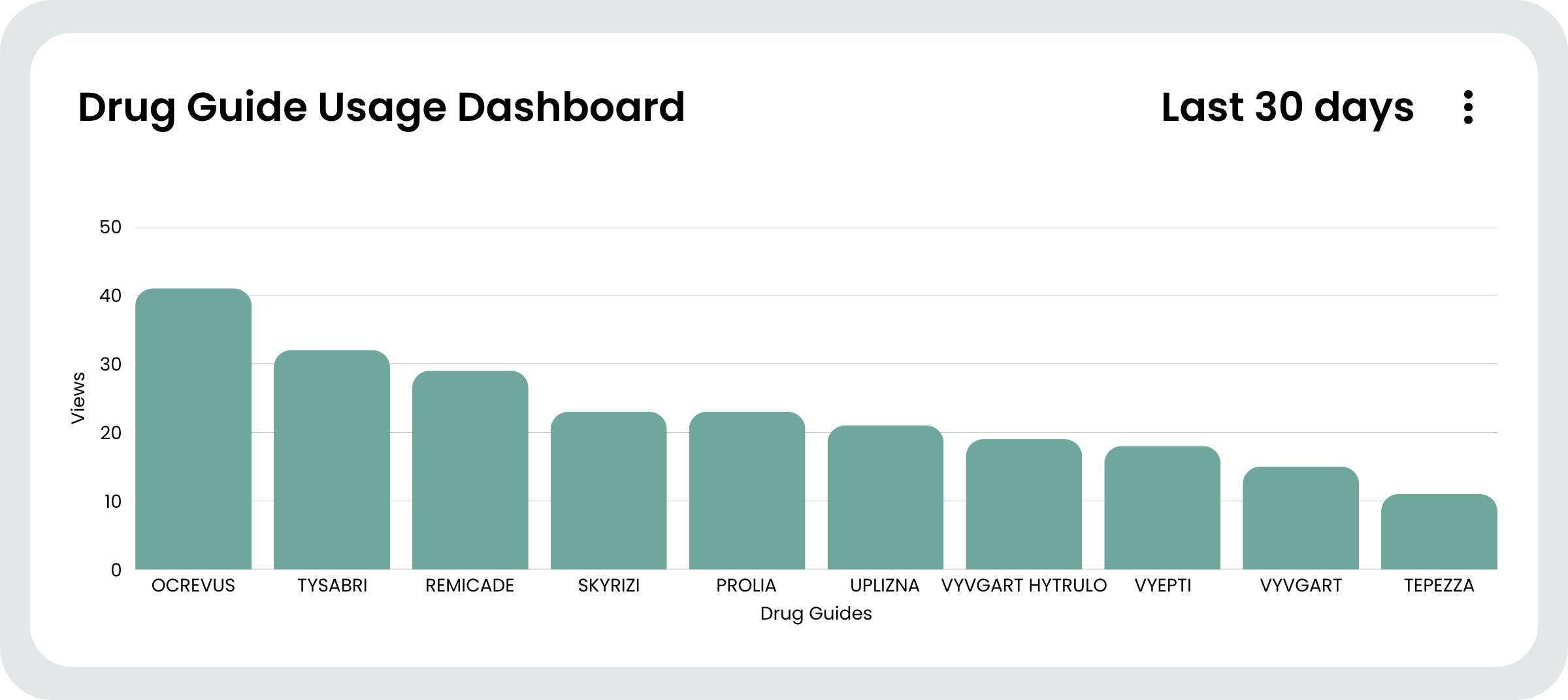
Supporting the clinical team requires knowledge about when and where they are facing challenges. With centralized oversight, leadership can identify any trends in knowledge gaps, pull audit-ready reports, and verify that safety protocols are being followed.
Closing the Gaps Before an Error Occurs
Medication errors in infusion therapy are rarely due to a single case of individual negligence. Clinicians are human and they do make mistakes, but heavy manual math burdens, stale and inconsistent guidelines, and informal training modules set them up for failure.
When teams are forced to navigate these workflow deficiencies while managing high-risk infusion drugs, medication errors are bound to happen. Effective error prevention begins by identifying where their operational vulnerabilities lie.
Turning your red flags green doesn’t have to mean reinventing the wheel and rebuilding your clinical operations. All you need is to find the right tool that meets you where you are.
The best software solution to alleviate the administrative and mental burden on your team should provide you with:
- Built-in calculators for dosing, compounding, infusion rates, and titrations/tapers
- Medication guidelines for every step in the infusion process, reviewed by clinical eyes
- Visibility into when and where in the guidelines a drug’s package insert was updated
- Training courses and continuing education access for onboarding and confidence building
- Oversight into staff competency and drug protocol compliance
- Standardized access across all departments and locations
If this sounds like what your infusion practice is looking for, we can help you find it.
RxToolKit is an infusion protocol and clinical decision support software solution built by clinicians, for clinicians. We integrate with the leading infusion workflow management platform to flow seamlessly into your day-to-day practices, all while improving clinical outcomes and reducing medication errors. Close the gaps in your practice and put patient safety first: See how our software works.
Regardless of what comes next, identifying where these red flags exist is a milestone. You’re one step closer to building a safer practice and protecting your clinicians, your organization, and your patients.
When you’re ready to explore software solutions, RxToolKit will be here.
References:
Center for Drug Evaluation and Research. (n.d.). Drug safety-related labeling changes (SRLC) database. U.S. Food and Drug Administration. https://www.fda.gov/drugs/drug-safety-and-availability/drug-safety-related-labeling-changes-srlc-database-overview-updates-safety-information-fda-approved
Dimmer, A., Baird, R., & Puligandla, P. (2024). Role of practice standardization in outcome optimization for CDH. World journal of pediatric surgery, 7(2), e000783.
DiTrapano, C. (2022, September 13). Minimize distractions in the clinical setting. RxToolKit. https://rxtoolkit.com/minimize-distractions-in-the-clinical-setting/
The importance of care standardization in medical practice. Zynx Health. (2025, March 25). https://www.zynxhealth.com/insights/importance_of_care_standardization/
Jbaldera@Amcp.org. (2019, July 18). Medication errors. AMCP.org. https://www.amcp.org/concepts-managed-care-pharmacy/medication-errors
Lesar, T. S. (1998, April). Errors in the Use of Medication Dosage Equations. JAMA Network. https://jamanetwork.com/journals/jamapediatrics/fullarticle/189421
McCormack, M. (2024, November 15). Reducing medical errors in healthcare: The Role Training Software Plays. Compliancy Group. https://compliancy-group.com/medical-errors-in-healthcare/
Mulac, A., Hagesaether, E., & Granas, A. G. (2022). Medication dose calculation errors and other numeracy mishaps in hospitals: Analysis of the nature and enablers of incident reports. Journal of advanced nursing, 78(1), 224–238. https://doi.org/10.1111/jan.15072
Reducing medication errors via targeted dosage education. Wolters Kluwer. (2026, June 15). https://www.wolterskluwer.com/en/expert-insights/reducing-medication-errors-via-targeted-dosage-education
Westman, J., Johnson, K. D., Smith, C. R., & Kelcey, B. (2023, October 28). The contributors to dosage calculation ability and its applicability to Nursing Education: An integrative review – sciencedirect. ScienceDirect. https://www.sciencedirect.com/science/article/abs/pii/S8755722323001618